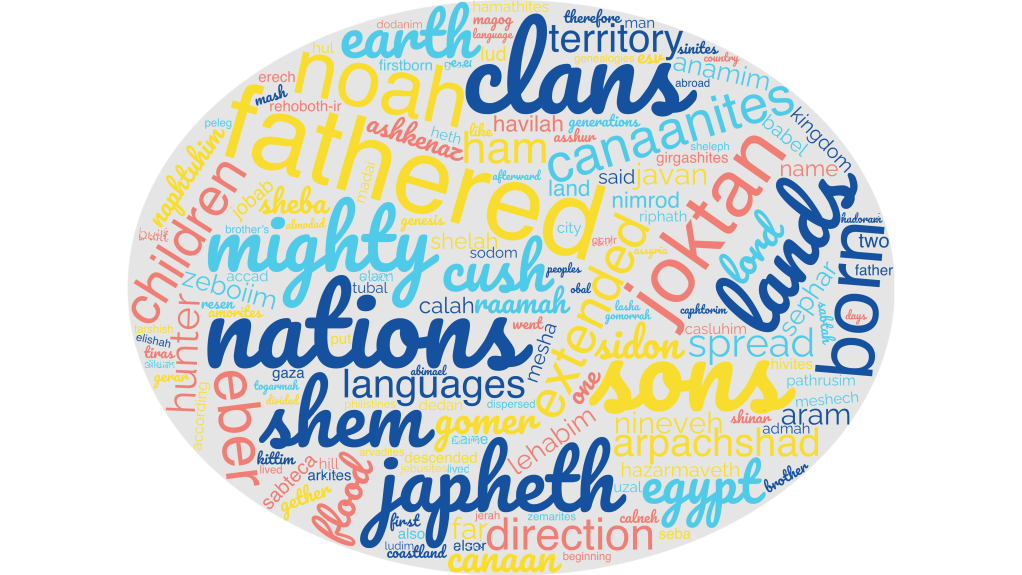
Genesis 10: The Table of Nations and the Promise of Christ
Genesis 10 is often one of those chapters we skim quickly in our Bible reading plans. It’s filled with names—strange names, at that. But if “all Scripture is breathed out by God and profitable” (2 Tim. 3:16), then even this long list of descendants has riches for us. In fact, Genesis 10—sometimes called The Table of Nations—is one of the most remarkable passages in the whole Bible.
Let’s take a closer look at how this chapter works, why it’s placed where it is, and how it ultimately points us to Jesus Christ.
The Table of Nations in Context
Genesis 10 follows the story of Noah and the flood. God has judged the earth for its wickedness, but in his mercy he has preserved Noah and his family, promising never again to destroy all flesh by floodwaters. Now humanity is starting over.
Genesis 9 ends with Noah’s sons—Shem, Ham, and Japheth—receiving blessings and a curse (9:24–27). Genesis 10 then unfolds their lines of descent. In a sense, it’s the fulfillment of God’s command in Genesis 9:1: “Be fruitful and multiply and fill the earth.”
This chapter also sets the stage for what comes next: the rebellion at Babel in Genesis 11. Genesis 10 shows the nations spreading across the earth. Genesis 11 shows how their prideful attempt to remain united in rebellion brings about God’s judgment and scattering.
So Genesis 10 is not just “background.” It is a bridge: it connects God’s covenant with Noah to the story of Abraham, who will be chosen to bless the nations listed here.
Literary Shape of Genesis 10
At first glance, Genesis 10 looks like a bare genealogy. But a closer read reveals artistry.
Three-fold Structure
The chapter is structured around Noah’s three sons: Japheth (vv. 2–5), Ham (vv. 6–20), and Shem (vv. 21–31). Each section follows the pattern of naming descendants and describing the lands or nations that came from them.
Expansion of Nations
Repetition of the phrase “according to their clans, their languages, their lands, and their nations” emphasizes how humanity is spreading outward. It’s a deliberate echo of God’s command to fill the earth.
Selective Detail
Some lines are traced briefly (like Japheth’s), while others get much more attention (like Ham’s, especially through Nimrod). This uneven treatment signals where the story is headed. The focus on Nimrod and the nations of Canaan points us toward the enemies Israel will later face.
Seventy Nations
Traditionally, Jewish interpreters counted 70 names here, symbolizing the totality of the nations. Seventy becomes a biblical shorthand for “all the peoples of the world.” (Compare Jesus sending out 70 disciples in Luke 10, a clear echo of this chapter.)
In short, this is not a random list. It’s a carefully arranged portrait of the world after the flood.
Key Figures and Themes
Japheth (vv. 2–5): His line spreads mostly toward the coastlands and distant nations. These are the peoples “afar off.”
Ham (vv. 6–20): His descendants include Egypt, Canaan, and Babylon—the future oppressors of God’s people. Notice also Nimrod, “a mighty man,” whose kingdom includes Babel. The seeds of rebellion are already sprouting.
Shem (vv. 21–31): His line leads to Eber, from whom comes the Hebrews. This is the family through whom God will call Abram in chapter 12.
Thus the chapter moves from the nations broadly (Japheth), through the nations that will oppose God’s people (Ham), and finally narrows to the family of promise (Shem).
How Genesis 10 Points to Christ
At first, Genesis 10 might seem far removed from the gospel. But here’s the good news:
Christ is the Blessing to the Nations
Genesis 10 shows us the nations scattered across the earth. Genesis 12 promises that through Abraham, all these nations will be blessed. Christ, Abraham’s offspring (Gal. 3:16), is the fulfillment.
Christ Breaks Down Dividing Walls
The Table of Nations highlights human division—different clans, languages, lands. But in Christ, these barriers begin to fall. At Pentecost (Acts 2), people from many nations hear the gospel in their own tongue. Revelation 7 shows the climax: people from every tribe and tongue gathered around the throne.
Christ Defeats the Nimrods of the World
Nimrod builds his empire in defiance of God. Throughout history, empires rise up in rebellion. But all of them fall before the King of kings. Christ is the true ruler whose kingdom will never end.
Conclusion
Genesis 10 is not a dry genealogy—it’s a sweeping vision of the world God made and the nations he scattered. It shows us the breadth of humanity, the reality of rebellion, and the line of promise.
And above all, it prepares us for Christ: the seed of Abraham, the blessing to the nations, the Savior who gathers people from every corner of Genesis 10 into one redeemed family.
So the next time you read this “Table of Nations,” don’t skim. See the artistry, feel the weight of God’s purposes, and rejoice in the Christ who brings good news to all nations—even ours.

Leave a comment