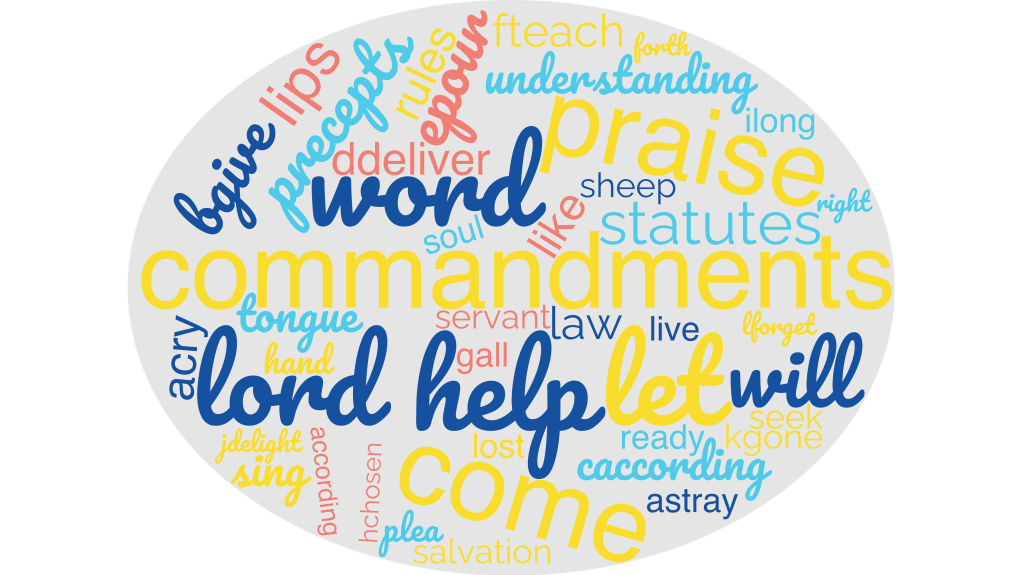
The God Who Seeks the Lost: Christ in Psalm 119:169–176
The final stanza of Psalm 119 (Tav) brings the psalm to a climactic close. After 21 stanzas of celebrating God’s Word, the psalmist ends not with triumph but with dependence: a cry for understanding, deliverance, and even rescue as a wandering sheep. This humble conclusion reminds us that delight in God’s Word is always paired with the need for God’s grace.
When read in light of Christ, these verses shine even brighter. Jesus is the Word made flesh, the obedient Son, and the Shepherd who seeks the lost. He is both the perfect singer of this stanza and the answer to its petitions.
Prayer for Understanding and Deliverance (Psalm 119:169–170)
“Let my cry come before you, O LORD;
give me understanding according to your word!Let my plea come before you;
deliver me according to your word.”
Literary Note: The psalmist frames his prayer with “cry” and “plea.” This is not cool detachment but desperate dependence. He longs for two things: understanding (wisdom to live) and deliverance (salvation from enemies). Both are sought “according to your word”—God’s promises are the ground of hope.
Christological Fulfillment: Jesus himself lived by God’s Word, understanding and fulfilling it perfectly. Yet he also cried out in Gethsemane and on the cross, entrusting himself to the Father’s promises. In him, we receive both understanding (through the Spirit, John 14:26) and deliverance (through the gospel, Rom 1:16).
We might imagine Jesus helping his disciples see: “Where you cry for wisdom, I give you my Spirit. Where you plead for deliverance, I give you my cross.”
Praise as the Fruit of God’s Word (Psalm 119:171–172)
“My lips will pour forth praise,
for you teach me your statutes.My tongue will sing of your word,
for all your commandments are right.”
Literary Note: The response to divine instruction is worship. The psalmist envisions lips and tongue overflowing with praise. God’s teaching is not just to be obeyed but celebrated, because it is righteous and good.
Christological Fulfillment: Jesus is the true worshiper, whose lips always honored the Father. In him, the church becomes a singing people. He puts a new song in our mouths (Ps 40:3), teaching us to praise God not only for the law but for its fulfillment in him.
We can imagine Jesus pointing his followers to this verse: “This joy is mine, and I share it with you, so that your lips and tongues too may overflow with praise.”
Longing for God’s Help (Psalm 119:173–174)
“Let your hand be ready to help me,
for I have chosen your precepts.I long for your salvation, O LORD,
and your law is my delight.”
Literary Note: The imagery of God’s “hand” emphasizes strength and immediacy. The psalmist claims loyalty to God’s precepts, but he knows that divine help is still necessary. Delight in God’s law does not cancel the need for divine salvation.
Christological Fulfillment: Jesus alone could say he truly chose the Father’s precepts in perfect faithfulness. Yet even he prayed for the Father’s hand of help (Luke 22:42–43). In him, our longing for salvation is met: the mighty hand of God has acted decisively in the cross and resurrection.
We might imagine Jesus teaching: “The salvation you long for is here, in me. The hand you ask for is the hand that now holds you.”
Commitment and Confession (Psalm 119:175–176)
“Let my soul live and praise you,
and let your rules help me.I have gone astray like a lost sheep;
seek your servant,
for I do not forget your commandments.”
Literary Note: The stanza closes with paradox. On one hand, the psalmist resolves to live and praise. On the other, he confesses straying like a sheep. The psalm does not end in self-congratulation but in humility: the worshiper needs God to seek him. This final note of dependence is the truest note of faith.
Christological Fulfillment: Jesus is both the righteous worshiper and the Good Shepherd. He never strayed, yet he came to seek the straying (Luke 15:4–7). The psalmist’s cry is answered in Christ, who lays down his life for the sheep and carries them home.
We might picture Jesus explaining to his disciples: “This psalm ends with a lost sheep. That is why I came—to seek and to save the lost. This closing verse is the story of your life, and I am its answer.”
Conclusion: The Shepherd at the End of Psalm 119
Psalm 119 ends not with human achievement but with divine pursuit. The psalmist delights in God’s Word, longs for understanding, prays for salvation, and confesses his wandering. The hope of the psalm is not that we will never stray but that God will always seek us.
In Christ, this hope is fulfilled. He is the Word we long to understand, the Deliverer we plead for, the Teacher who fills our mouths with praise, the Hand who saves, and the Shepherd who seeks us when we wander.
Takeaway: The final stanza of Psalm 119 is not a low note but the deepest note—the confession that keeps us dependent on grace. And in Jesus, we find that grace abundantly supplied.

Leave a comment