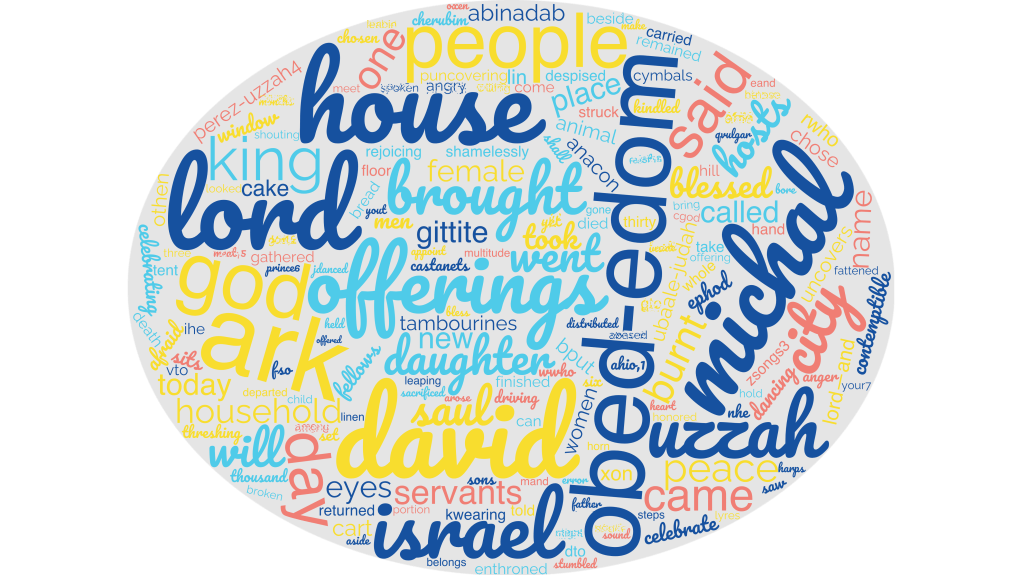
The Ark, the King, and the Presence of God: A Literary Analysis of 2 Samuel 6
2 Samuel 6 Introduction
Few passages in Scripture combine joy, fear, and worship as vividly as 2 Samuel 6.
Here, David brings the ark of the covenant into Jerusalem, establishing the city not merely as his political capital but as the dwelling place of God’s presence.
Yet the narrative is not smooth—it is filled with dramatic tension, tragedy, and celebration.
Literary artistry drives the story forward, showing us the holiness of God, the role of the king, and the nature of true worship.
Above all, it points us to Christ, the greater King who ushers His people into God’s presence forever.
Literary Structure of 2 Samuel 6
The chapter unfolds in three distinct movements:
- The First Attempt to Bring the Ark (2 Samuel 6:1–11)
- 2 Samuel 6:1–5: The festive procession.
- 2 Samuel 6:6–7: Uzzah’s death.
- 2 Samuel 6:8–11: David’s fear and the ark’s temporary resting place at Obed-Edom’s house.
- The Second Attempt to Bring the Ark (2 Samuel 6:12–19)
- 2 Samuel 6:12–15: A joyful procession with sacrifice and music.
- 2 Samuel 6:16–19: David’s celebration and blessing of the people.
- Michal’s Contempt for David (2 Samuel 6:20–23)
- A private confrontation between David and Michal.
- A stark contrast between worship in humility and disdain rooted in pride.
This three-part movement progresses from fear to joy to division, underscoring the seriousness of God’s holiness and the necessity of worshiping Him rightly.
2 Samuel 6 Literary Features
Contrast and Reversal
The first attempt to move the ark ends in disaster, while the second attempt ends in blessing.
This contrast highlights the central theme: God must be approached on His terms, not man’s.
The ark cannot be carried on a cart like a common object; it must be borne by the priests as God commanded (Numbers 4:15; Deuteronomy 10:8).
Irony
Uzzah’s name in Hebrew can be related to the word for “strength.”
Ironically, his attempt to steady the ark with his own strength leads to his death.
Human power cannot secure God’s presence; it must rest upon God’s holiness and provision.
Symbolism of Dance and Clothing
David dances with abandon before the Lord, clothed not in royal regalia but in a simple linen ephod (2 Samuel 6:14).
His stripped-down appearance symbolizes humility.
By contrast, Michal emphasizes outward dignity and despises David’s vulnerability.
The true king is the one who humbles himself before God.
Narrative Tension
The story moves between extremes—celebration and mourning, blessing and judgment, intimacy and estrangement.
This tension mirrors the paradox of God’s presence: He is both holy and near, both dangerous and gracious.
Theological Themes in 2 Samuel 6
The Holiness of God
The death of Uzzah reminds us that God is not to be approached casually.
His presence is life-giving, but it is also dangerous to sinners who disregard His commands.
As Hebrews 12:29 says, “Our God is a consuming fire.”
The Joy of God’s Presence
When approached rightly, God’s presence brings blessing and joy.
The ark at Obed-Edom’s house produces abundance (2 Samuel 6:11), and David’s second procession is marked by music, dancing, and feasting (2 Samuel 6:12–15, 18–19).
God is both holy and gracious.
The Nature of True Worship
David’s worship is wholehearted and humble.
He cares nothing for appearances, only for honoring the Lord.
Michal’s contempt reveals the opposite—a heart more concerned with dignity, reputation, and appearances than with God’s glory.
The Role of the King
As king, David leads the people into the presence of God.
He blesses them in the Lord’s name (2 Samuel 6:18) and provides food for all (2 Samuel 6:19).
David is not only a ruler but also a mediator of blessing, prefiguring the greater role of Christ.
From David to Christ in 2 Samuel 6
2 Samuel 6 points forward to Jesus Christ in several ways:
The Presence of God
The ark represented God’s throne and presence among His people.
Christ is “Immanuel,” God with us (Matthew 1:23).
In Him, the fullness of God dwells bodily (Colossians 2:9).
The King as Mediator
David blessed the people and gave them bread (2 Samuel 6:18–19).
Jesus, the greater Son of David, feeds His people with the bread of life (John 6:35) and mediates eternal blessing.
Worship in Humility
David humbled himself before the Lord, foreshadowing Christ’s humility.
Jesus “made himself nothing, taking the form of a servant” (Philippians 2:7), and in His humility secured our salvation.
The Holiness of God
Uzzah’s death reminds us that sin cannot stand in God’s presence.
Christ bore that judgment for us, so that we may now draw near with confidence (Hebrews 4:16).
At Pentecost, the Spirit of Christ dwelt not in a box of acacia wood overlaid with gold, but in His people, the living temple of God.
What the ark symbolized is now fulfilled in Christ and His church.
2 Samuel 6 Conclusion
2 Samuel 6 is not merely a story of ancient Israelite pageantry.
It is a deeply crafted narrative about God’s holiness, the joy of His presence, and the nature of true worship.
Through contrasts, irony, and tension, the story teaches us that God’s presence cannot be manipulated or controlled, but must be received in humility and reverence.
David’s joy before the ark foreshadows the eternal joy of God’s people in Christ.
Uzzah’s death reminds us of God’s consuming holiness, while David’s dance reminds us of the freedom and humility of those who know His grace.
Above all, this chapter points us to Jesus, the true King who brings God’s presence to His people and leads us in everlasting worship.

Leave a comment