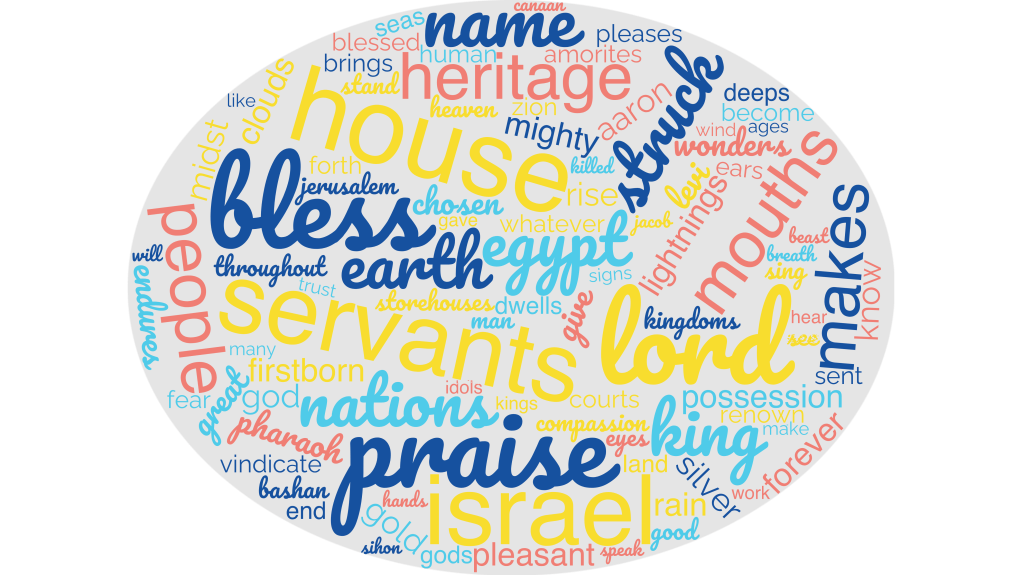
Psalm 135: The Call to Praise the Sovereign Lord
Psalm 135 is a majestic hymn that calls God’s people to worship Him for His greatness, His sovereignty, and His redemptive acts. It blends themes from earlier psalms, quotes extensively from Israel’s Scriptures, and weaves them together into a fresh, unified call to praise. In many ways, this psalm serves as a summary of Israel’s worship: it looks back to God’s mighty acts in creation and redemption, contrasts Him with the false idols of the nations, and concludes with a blessing upon His covenant people.
Placed after the Songs of Ascents (Psalms 120–134), Psalm 135 begins a new section of the Psalter characterized by praise and doxology. If the pilgrim songs led worshipers into God’s presence, Psalm 135 tells them what to do once they arrive: bless the Lord.
Psalm 135 Structure
Psalm 135 unfolds in five movements:
The Call to Praise (Psalm 135:1–4) – God’s people, especially His servants in the house of the Lord, are summoned to bless Him because He is good and because He has chosen Israel.
The Lord’s Sovereign Power (Psalm 135:5–7) – The psalmist affirms that the Lord is greater than all gods, exercising sovereign control over heaven, earth, sea, and weather.
The Lord’s Saving Acts (Psalm 135:8–14) – God’s mighty works in history, especially the exodus from Egypt, the defeat of kings, and the gift of the land, are recounted as reasons for praise.
The Futility of Idols (Psalm 135:15–18) – In contrast to the living God, the idols of the nations are lifeless, powerless, and dehumanizing.
The Closing Benediction (Psalm 135:19–21) – A fourfold call for all Israel—house of Israel, house of Aaron, house of Levi, and all who fear the Lord—to bless the Lord, concluding with praise from Zion.
Psalm 135 Literary Features
A Tapestry of Scripture
Psalm 135 is one of the most intertextual psalms. It quotes or echoes multiple passages, including:
- Psalm 113 and 115 (similar language of blessing and contrast with idols).
- Deuteronomy 32 (God’s sovereignty and deliverance).
- Exodus 19 and the historical accounts of the exodus and conquest.
The psalm functions like a patchwork quilt, stitching together the themes of Israel’s worship traditions into a unified hymn.
The Framing of Praise
The psalm begins and ends with the command to “Praise the LORD” (Hallelujah). This framing device gives the psalm a liturgical feel: the congregation is called to praise, reminded of reasons to praise, and dismissed with a blessing.
The Use of Contrast
A central rhetorical device is contrast. The psalm sets the greatness of the Lord over against the impotence of idols. Where God creates, acts, and redeems, idols are silent and lifeless. Where God blesses His people, idols ensnare those who trust in them.
The Catalog of God’s Works
The psalmist uses a catalog or list style to recall God’s works: striking down Egypt’s firstborn, defeating Sihon and Og, giving Israel the land. These specific references ground Israel’s worship in history, reminding them that their praise is not vague sentiment but a response to God’s concrete acts of salvation.
Psalm 135 Theological Themes
The Goodness of God
Psalm 135:3 highlights the Lord’s goodness: “Praise the LORD, for the LORD is good.” God’s people are not merely compelled to worship Him because He is powerful; they are drawn to worship because He is good. His character is the foundation of true worship.
Election and Covenant
Psalm 135:4 emphasizes God’s choice: “For the LORD has chosen Jacob for himself, Israel as his own possession.” Worship flows from the covenant relationship. God’s people belong to Him by His sovereign choice, not by their own merit.
The Lord’s Absolute Sovereignty
Psalm 135:5–7 declare that the Lord does whatever He pleases in heaven and on earth. The imagery of clouds, lightning, wind, and rain emphasizes His control over the natural world. The message is clear: the God who rules creation also rules history.
Redemption and Judgment
The exodus narrative (Psalm 135:8–12) reminds Israel that God saves His people by judging their enemies. His acts of redemption are inseparable from His acts of judgment. For Israel, this meant deliverance from Egypt and victory over kings; for the church, it means Christ’s victory over sin, death, and Satan.
The Futility of Idolatry
Psalm 135:15–18 portray idols as man-made, lifeless, and powerless. Those who make them and trust them become like them: spiritually dead. This warning is timeless. Idols are not limited to ancient statues; they include any false gods of our age—wealth, power, success, or self.
Worship as Communal
The closing verses summon every segment of God’s people—Israel, priests, Levites, and all who fear the Lord—to bless Him. Worship is not an individual act alone; it is the corporate response of the whole covenant community.
Psalm 135 Pointing to Christ
Psalm 135 points us forward to Christ in several ways:
The Goodness of God – Christ reveals the goodness of God in human flesh, embodying God’s steadfast love (John 1:14).
Election and Covenant – In Christ, God chooses a people from every tribe and nation, making them His possession (1 Peter 2:9).
Sovereignty and Power – Christ, risen and ascended, has all authority in heaven and on earth (Matthew 28:18).
Redemption and Judgment – Just as God redeemed Israel through judgment on Egypt, Christ redeems His people through His victory over sin and Satan, bringing both salvation and judgment.
The Futility of Idols – Christ alone is the image of the invisible God (Colossians 1:15), the true and living One in contrast to dead idols.
Communal Worship – In Christ, the call to bless the Lord extends to the ends of the earth. The church joins Israel’s song of praise, anticipating the heavenly chorus of Revelation 19:1: “Hallelujah! Salvation and glory and power belong to our God!”
Conclusion
Psalm 135 is a hymn of pure praise. It calls God’s people to bless the Lord because of who He is—good, sovereign, and faithful—and because of what He has done—creating, redeeming, and blessing His covenant people. It reminds us that true worship is rooted in God’s character, anchored in His saving acts, and contrasted with the emptiness of idols.
For believers today, this psalm directs our eyes to Christ, the fulfillment of God’s covenant promises and the one who leads His people in everlasting praise. Just as the psalm begins and ends with Hallelujah, so the story of redemption ends with eternal praise: God’s people, redeemed by Christ, blessing the Lord forever.

Leave a comment